.jpg)
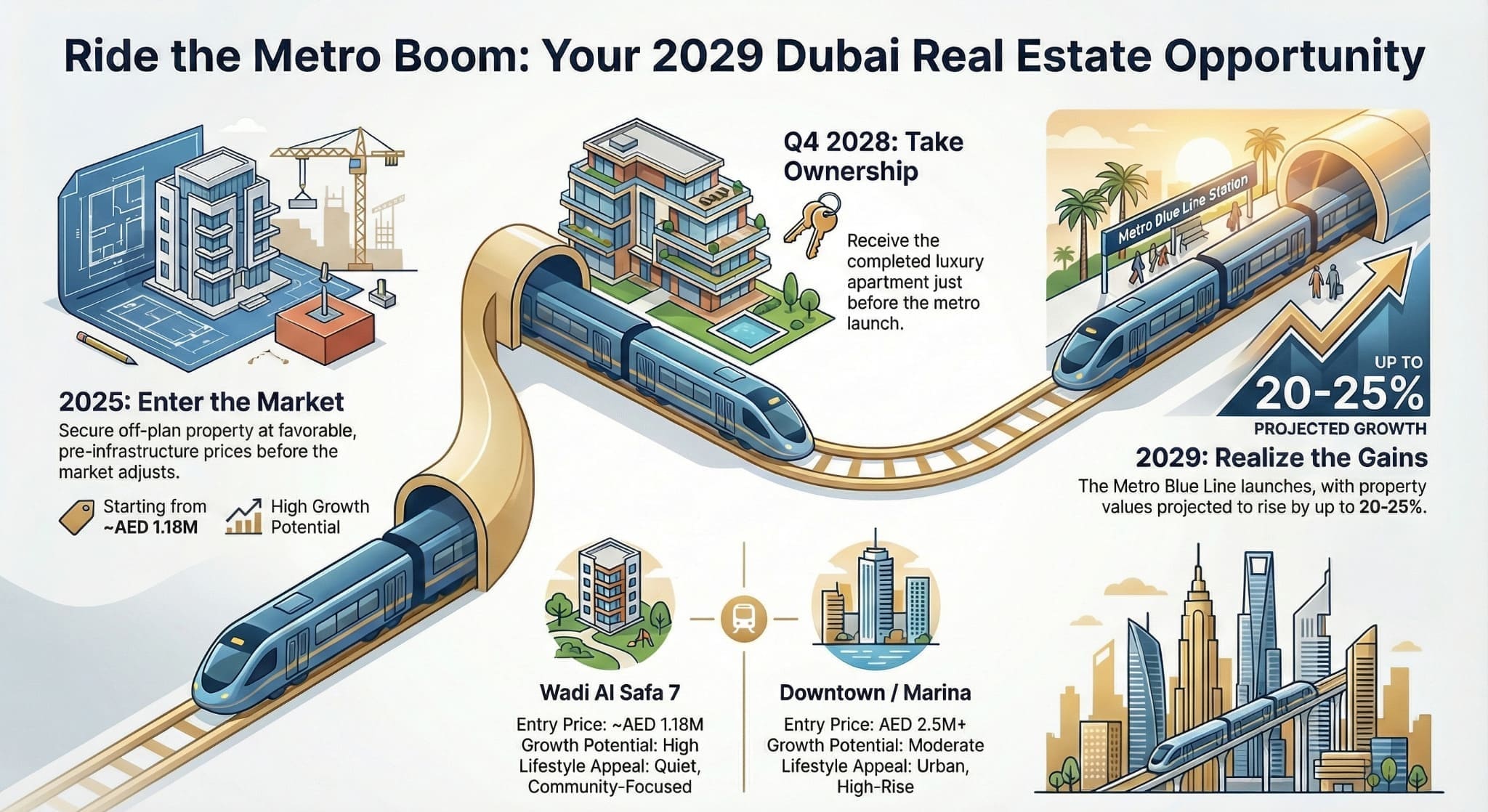
The Dubai Metro Blue Line, scheduled for 2029, is expected to increase property values in Dubailand, Wadi Al Safa 7, Silicon Oasis, and Academic City by up to 20–25%. Historical data from previous line launches reveals that properties near metro stations command higher rental yields and capital appreciation. Investing in off‑plan projects like Mayfair Nexus before handover in Q4 2028 positions buyers to capture this infrastructure premium.
Dubai real estate is once again entering a transformational chapter. With the Dubai Metro Blue Line set to become operational in 2029, smart investors are already positioning themselves near the route to capture future capital appreciation and rental demand. Among the most compelling opportunities is Mayfair Nexus, a boutique luxury apartment development in Wadi Al Safa 7 (Dubailand). Here’s why investing now — before the metro boom — can lead to outsized returns.
When you hear “Dubai Metro,” think real estate acceleration engines. In previous cycles, properties near metro stations surged ahead in both price and rent. Thanks to the upcoming Blue Line, areas once considered fringe are now prime investment zones. Wadi Al Safa 7 — previously overshadowed by villas and townhouses — is now on the radar for both capital growth and rental yield.
What Is the Dubai Metro Blue Line and Why It Matters for Property Values
The Dubai Metro Blue Line is a strategic extension scheduled for completion in 2029. Stretching roughly 30 km along Sheikh Mohammed Bin Zayed Road (E311), it will connect growing residential hubs like Dubai Silicon Oasis and Academic City directly to Downtown Dubai, the airport, and Dubai Creek Harbour.
Key Connectivity Features
- 14 planned stations along high‑growth corridors
- Stops at urban centers and key employment hubs
- Expected travel time reductions of up to 50%
Infrastructure projects of this scale drive demand and uplift property prices, especially within a 10‑15 minute radius of stations.
Why it matters: Properties near metro lines attract higher rents and command stronger price growth — a phenomenon known as the Metro Premium.
How the Metro Blue Line Creates a Strategic Window for Off‑Plan Buyers
Investing in Dubailand in 2025 — before the metro is operational — gives buyers a pre‑infrastructure pricing advantage. Once construction becomes visible and projections solidify, property prices trend upward quickly.
Timeline Advantage
By purchasing now, buyers benefit from both organic Dubai growth (4–6% annually) and the infrastructure effect (estimated 10–15% post‑metro uplift).
Why Wadi Al Safa 7 Is a Hidden Real Estate Gem
Wadi Al Safa 7 has traditionally been a villa‑centric luxury district. With 90% of older inventory comprising villas and townhouses, there’s a supply gap for premium apartments — especially for professionals and long‑stay tenants.
Key Attributes of Wadi Al Safa 7
- Established luxury residential community
- Minutes to Dubai Silicon Oasis and Academic City
- Proximity to major schools and retail destinations
- Quiet, low‑density environment ideal for families
Properties here combine prestige with practical connectivity, which is rare in Dubai’s growth corridors.
Mayfair Nexus: The Perfect Product for the Metro‑Driven Future
.jpg)
G+4 Boutique Luxury Living
Unlike tall towers, Mayfair Nexus offers a community‑oriented, low‑rise residential experience that matches the character of Wadi Al Safa 7.
Value Drivers
- Private jacuzzis and garden units — villa‑style perks
- Modern amenities — Zen gardens, cinema lounge, wellness zones
- Starting prices from ~AED 1.18M — competitive against urban high‑rent zones
- Renter and buyer market includes:
- University faculty and students
- Silicon Oasis professionals
- Families seeking both tranquility and connectivity
How Far Is Mayfair Nexus from the New Metro Stations?
Mayfair Nexus is just a 5‑10 minute drive from the planned Dubai Silicon Oasis and Academic City metro stations. Residents can easily park and ride, connecting quickly to Downtown, DIFC, and major employment centers.
The “Metro Premium”: What History Tells Us
Historically, properties within 10–15 minutes of metro stations have seen:
- Higher rental demand from professionals and commuters
- Capital appreciation spikes post‑metro launch
- Increased investment interest from both local and international buyers
The Red and Green metro lines drove these effects in Dubai’s earlier cycles, and the Blue Line is poised to repeat the trend.
Dubai 2040 Master Plan + Silicon Oasis Job Growth
According to the Dubai 2040 Urban Master Plan:
- Silicon Oasis is earmarked as a major technology and innovation hub
- Expected growth of jobs, residential demand, and global corporate relocation
- Transit access becomes even more critical for future residents
This makes areas like Wadi Al Safa 7 more desirable for both long‑term living and investment portfolio diversification.
Payment Plans: How Modern Financing Boosts Investor ROI
Many buyers are concerned about capital exposure. Contemporary off‑plan projects in Dubai like Mayfair Nexus offer flexible installment plans that ease pressure:
Why This Matters:
- More manageable cash flow
- Ability to hold until post‑Metro appreciation
- Reduced risk versus upfront full price purchases
Investors entering now benefit from financing while infrastructure is still unfolding.
The Ideal Timeline: Buy Now, Handover Before the Metro Launch
By buying in 2025:
- You secure a luxury asset before prices adjust
- Take handover in Q4 2028
- Be positioned for rental or sale as the Metro opens in 2029
This creates an ideal buy‑build‑capture cycle.
How Wadi Al Safa 7 Compares to Downtown Dubai and Marina
For investors targeting higher growth percentage wise, inner Dubailand districts with improving transit infrastructure offer a compelling profile.
FAQ’s
Q. When will the Dubai Metro Blue Line be completed and operational?
The Dubai Metro Blue Line is officially scheduled for completion and operation in 2029. It will connect key growth districts like Dubai Silicon Oasis, Academic City, and Dubai Creek Harbour, reducing commute times and boosting property values near stations.
Q. How does metro proximity affect property prices in Dubai?
Properties within a 10–15 minute radius of metro stations in Dubai historically show higher rental yields and capital appreciation. This “Metro Premium” arises from improved connectivity, tenant demand, and long‑term livability.
Q. Is Mayfair Nexus a good off‑plan investment in Dubailand?
Mayfair Nexus combines luxury living, boutique design, low‑rise architecture, and strategic metro‑zone location with prices starting from ~AED 1.18M, making it a compelling Dubai real estate investment ahead of the Metro Blue Line launch.
Q. How far is Mayfair Nexus from planned Blue Line stations?
Mayfair Nexus is approximately a 5–10 minute drive from the planned Dubai Silicon Oasis and Academic City metro stations, offering convenient access via park‑and‑ride or local transit options.
Q. What payment plans are available for Mayfair Nexus off‑plan buyers?
Mayfair Nexus provides flexible installment plans that help manage cash flow during construction and align payment with completion, enhancing investment viability and return potential.
Q. Can foreign buyers invest in Wadi Al Safa 7 properties?
Yes, Wadi Al Safa 7 is a freehold area that allows foreign nationals and expats to buy and own property in Dubai with full rights.
Q. Why invest in Wadi Al Safa 7 instead of Downtown or Marina?
Wadi Al Safa 7 offers lower entry prices, higher percentage growth potential, future transit access, and a community lifestyle. Downtown and Marina are established but pricier, with less room for post‑infrastructure growth.
Q. What rental yield can investors expect near the Blue Line?
While yields vary, metro‑connected zones in Dubailand like Wadi Al Safa 7 often exceed average Dubai rent levels due to heightened tenant demand and improved accessibility.
Capture the 2028‑29 Infrastructure Premium
The next decade in Dubai real estate isn’t just about new projects — it’s about strategic infrastructure timing. Investing in Mayfair Nexus in Wadi Al Safa 7 now means securing an asset that is poised to benefit from the Metro Blue Line launch, job growth in Silicon Oasis, and demand for premium yet affordable apartment living.
The future belongs to those who act before the infrastructure boom — not after.
🔗 Ready to invest? Explore Mayfair Nexus or contact our team today.